
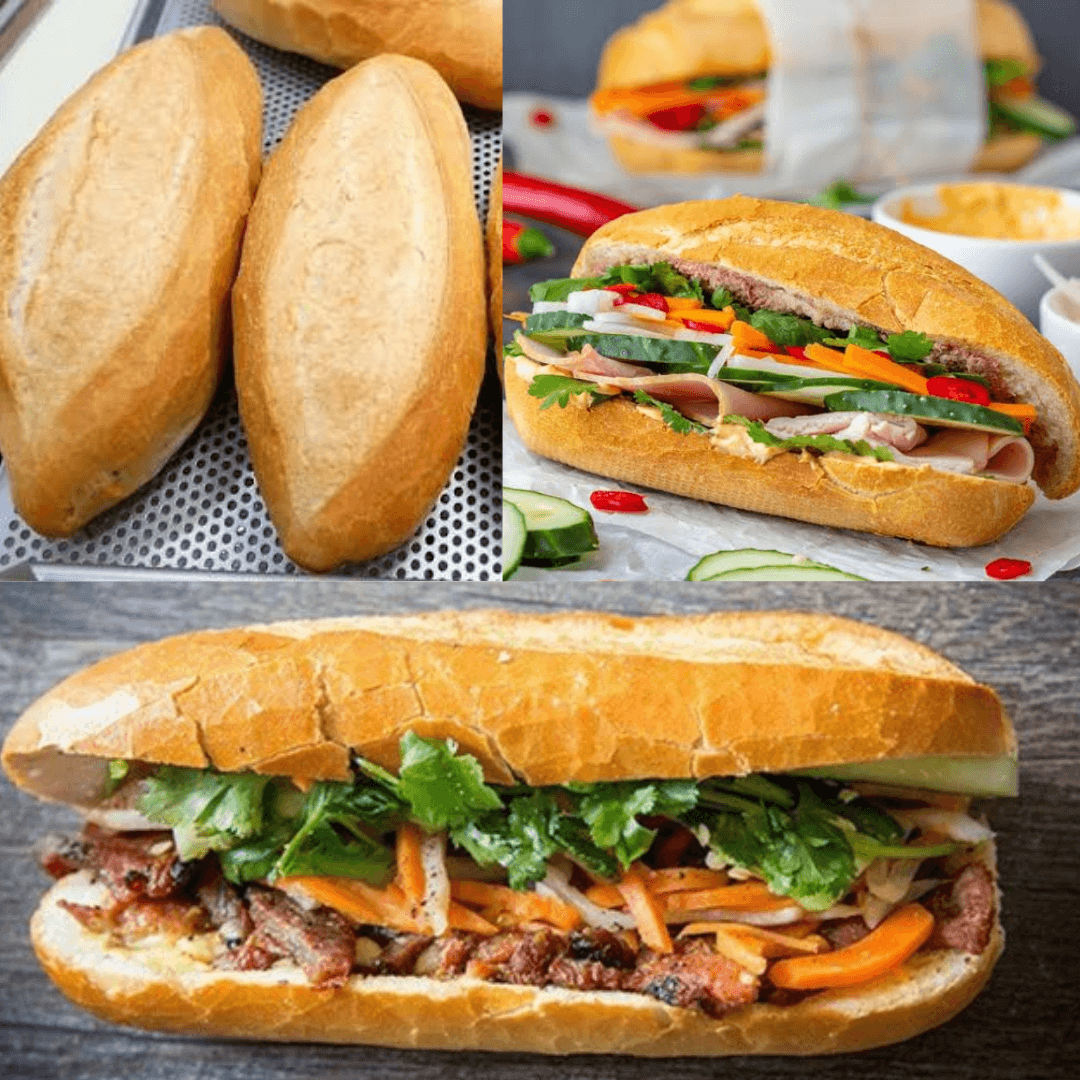
Where traditional French gastronomy reveres the baguette for its dense crumb, earthy chew, and thick, flour-dusted crust, mid-century Vietnamese street vendors committed what European baking purists would consider culinary heresy: they hollowed it out.
Faced with Saigon’s relentless tropical humidity—which quickly turns standard European crusts rubbery—and the steep cost of imported wheat, local bakers re-engineered the loaf. By blending rice flour with wheat, accelerating dough fermentation, and piping bursts of live steam into custom-built brick ovens, they created an entirely new species of bread. The result is a miracle of edible physics: a shell so brittle it shatters like dry autumn leaves under gentle fingertip pressure, enclosing an airy crumb that dissolves almost instantly on the tongue.
This deliberate void transformed the loaf from an austere staple into an adaptable culinary chassis. It was no longer meant to stand alone; it became an engine of contrast, capturing a complex balance of fatty indulgence, sharp acidity, and herbal crunch. If you ever travel through Vietnam, pulling up a low plastic stool by a street cart to taste this bread fresh from the toaster is not merely a recommendation—it is an absolute culinary rite of passage that you simply cannot miss.
The Regional Taxonomy
Across Vietnam’s shifting microclimates and regional palates, that hollowed-out canvas generated an extraordinary variety of street-level interpretations:
-
Bánh Mì Pa-tê (The Traditional Cold Cut Classic): The quintessential street cart standard. Its backbone is an interplay between rich, spiced pork liver pâté and emulsified egg yolk butter, layered with thinly sliced headcheese (giò thủ), steamed pork roll (chả lụa), and seasoned roast meats.
-
Bánh Mì Xíu Mại (Braised Meatballs): Famous in the misty mornings of Dalat, tender minced pork meatballs simmered in a light, sweet-savory tomato broth are either stuffed into a warm loaf or served bubbling in a small ceramic bowl garnished with scallion oil, intended for tearing and dunking.
-
Bánh Mì Chả Cá (Fried Fish Cake): A staple of coastal hubs like Nha Trang and Quy Nhon. Terrestrial meats are replaced by hot, fried fish patties spiced aggressively with black pepper and dill, drizzled with sweet garlic-chili fish sauce rather than soy or mayonnaise.
-
Bánh Mì Bò Kho (Aromatic Beef Stew Companion): Here, the baguette remains entirely uncut. Served alongside a slow-simmered broth steeped in star anise, lemongrass, and tender beef shank, the bread acts as a structural sponge to soak up rich aromatics.
-
Bánh Mì Que (The Slender Stick of Hai Phong): Stripped of all fresh herbs and pickled vegetables, this Northern street snack reduces the concept to its rawest essence. Measuring barely two fingers wide, the thin, blistered baguette is stuffed exclusively with a peppery liver pâté and a smear of chí chương (fermented local chili sauce), then crisped over red-hot charcoal.
-
Bánh Mì Ốp La (Fried Egg): The ubiquitous quick breakfast. Eggs fried sunny-side-up—frequently served sizzling in a miniature cast-iron pan alongside sweet Chinese sausage (lạp xưởng) and a dollop of pâté—are kept runny so the golden yolk can be mopped up with shards of hot crust.
Blueprint and Construction of the Classic Loaf
Building a proper traditional bánh mì is a strict sequence of culinary mechanics, ensuring moisture control, textural crunch, and flavor balance.
The Ingredients
-
The Bread: 1 authentic Vietnamese baguette (aerated, lightweight, paper-thin crust).
-
The Fats: 2 tablespoons rich liver pâté; 1.5 tablespoons bơ trứng (fresh egg-yolk mayonnaise emulsified with neutral oil and a pinch of salt).
-
The Proteins: 40g chả lụa (steamed Vietnamese pork roll, thinly sliced); 40g xá xíu (braised red-rimmed pork shoulder, sliced thin).
-
The Produce & Acids: 30g đồ chua (daikon and carrot julienned and pickled in equal parts vinegar, sugar, and water); 2 long cucumber spears; 3–4 sprigs of fresh cilantro with stems.
-
The Finish: 2–3 thin slices of fresh bird’s eye chili; 1 teaspoon Maggi liquid seasoning or savory meat reduction.
Assembly Steps
-
Flash-Toast the Shell: Heat the loaf in an oven or air fryer at 180°C for 2–3 minutes until the crust crackles audibly when lightly pinched, while keeping the interior soft.
-
Make the Longitudinal Incision: Slice the loaf horizontally along its flank, stopping three-quarters of the way through to preserve the spine as a sturdy hinge. Press the soft white crumb lightly against the walls to make room for the fillings.
-
Establish the Hydrophobic Barrier: Coat one inner wall with a thick layer of egg-yolk butter, and swipe the opposite inner wall with spiced liver pâté. This essential fat layer seals the crust, preventing the crisp shell from turning soggy from vegetable moisture.
-
Anchor the Proteins: Shingle the sliced pork roll and roast meats flatly across the base, providing an even layer of savory, dense bites from end to end.
-
Layer the Crunch and Aromatics: Lay the long cucumber spears directly beside the meat for structural crunch. Pack the drained pickled daikon and carrot down the center channel. Tuck fresh cilantro stems and sliced bird’s eye chilies directly into the seam.
-
The Final Drizzle: Drizzle the Maggi seasoning over the pickles and proteins, gently close the bread until you feel the crust break slightly under your palms, and eat immediately.
The Vietnamese bánh mì is a masterclass in culinary reclamation. It took an imported symbol of colonial hierarchy, discarded its European rigidity, and engineered it into a democratic masterpiece—eaten one-handed on the back of an idling motorbike, yet complex enough to permanently reshape the global lexicon of sandwiches.