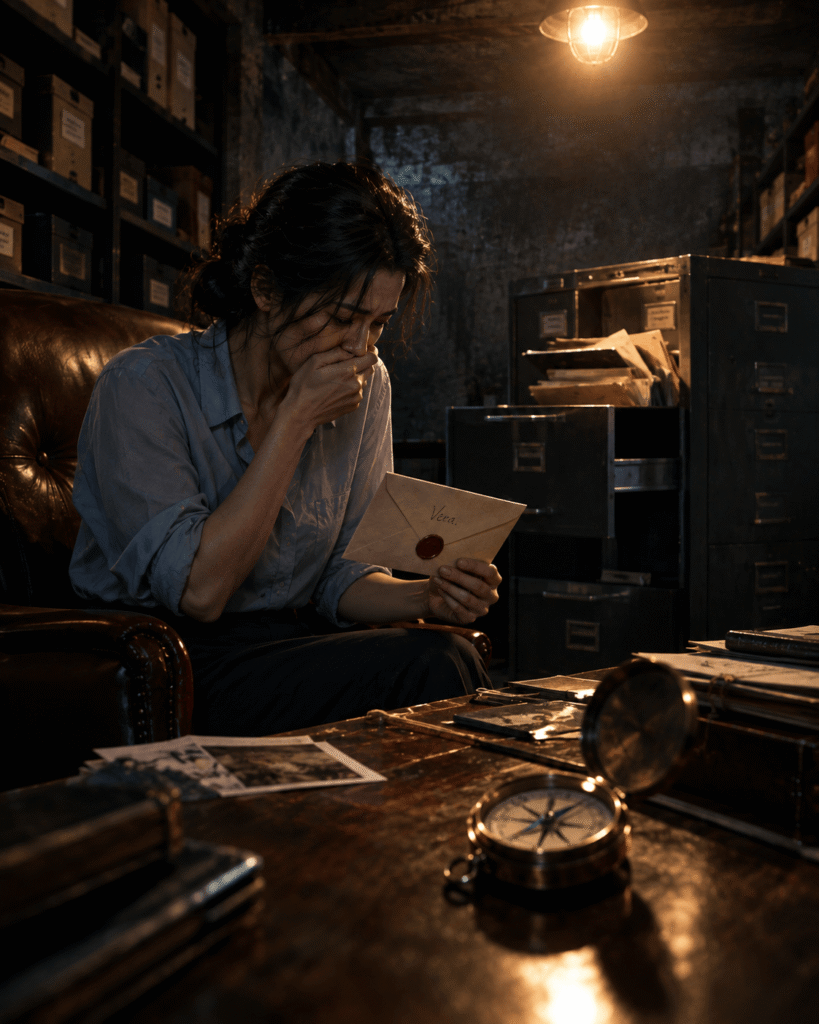

He faked deaths to save lives. She investigated them. But the only body that mattered was the one she’d kept hidden—his daughter.
The body on the table wasn’t supposed to exist.
Vera Lin had signed off on three drowning deaths this month—all in Sai Kung, all with no bodies recovered, all with paperwork so clean it practically gleamed. The kind of clean that made her teeth ache. She’d flagged the pattern in her weekly report, and her supervisor had smiled that particular smile—the one that didn’t reach his eyes—and told her not to worry about it.
But the body on the table was real. Female, mid-twenties, water in the lungs, no identification. The police had pulled her from the harbor at dawn, and now Vera stood in the morgue with a clipboard and a sinking feeling that someone had made a mistake.
She checked her watch. 4:47 PM. She was supposed to pick up Joy at 5:15. The morgue was in Kwun Tong; the school was in Wan Chai. If she left now, she could make it. If she stayed, she’d miss pickup, and Joy would be the last child waiting, again, and the teacher would give Vera that look—the one that said we understand, single mothers have it hard—and Vera would want to scream.
She stayed.
“Run the fingerprints again,” she told the attendant. “I want a name.”
“Already ran them, Miss Lin. No match in the system.”
“Then run them against the missing persons database. And the immigration records. Someone, somewhere, is looking for this girl.”
The attendant—a tired man with nicotine stains on his fingers—shrugged and turned away. Vera pulled out her phone, texted the school that she’d be late, and tried not to think about Joy’s face when she was the last one picked up.
Her phone buzzed. A reply from the school: No problem! Joy is helping Ms. Chan water the plants. She’s fine.
She wasn’t fine. Vera knew that. She was seven years old, and her mother was always late, always distracted, always chasing bodies that weren’t supposed to exist.
Vera pocketed the phone, touched the jade rabbit in her jacket pocket—a habit, a prayer, a reminder of why she did this work—and turned back to the body.
The girl’s hair was still wet. Someone had closed her eyes, but her mouth was slightly open, as if she’d been about to say something. Vera leaned closer.
There was a mark on the girl’s wrist. A small tattoo, almost hidden by the morgue’s harsh lighting: three waves, stacked.
The same mark Vera’s sister had gotten when she was sixteen, two months before she disappeared.
Vera made it to the school by 5:40. Joy was sitting on the steps outside, her backpack clutched to her chest, her small face set in that particular expression of patience that made Vera’s heart crack.
“I’m sorry,” Vera said, kneeling to her level. “I got—”
“Caught up,” Joy finished. “I know. It’s okay. Ms. Chan let me help with the plants. Did you know spider plants have babies? They grow little copies of themselves on long stems. That’s how they make more.”
“That’s—” Vera blinked. “That’s very interesting.”
“I asked Ms. Chan why they don’t just drop the babies, and she said the babies need to stay attached until they’re strong enough. Like how I stayed with you.” Joy stood, brushing off her uniform. “But I’m big now, so I can walk home myself. You don’t have to always come.”
“I want to come.”
“You’re always late.”
Vera had no answer for that. She took Joy’s hand—still small, still trusting—and they walked to the MTR station together.
They lived in a small flat in Sham Shui Po, two bedrooms, one bathroom, a view of the building across the alley and a sliver of sky. Vera had grown up in bigger places, but bigger places had come with bigger expectations. She preferred the cramped honesty of this neighborhood, where the wet market vendors knew Joy by name and the neighbor’s laundry dripped onto their windowsill.
Tonight, Joy did her homework at the kitchen table while Vera made rice and stir-fried the last of the vegetables. Her phone sat on the counter, face-down—a habit she’d developed after the first time her supervisor had “accidentally” seen her personal messages.
You’re not listening, she thought, remembering his smile. I’m listening, she’d said back. I’m always listening.
But listening wasn’t the same as understanding. And understanding, in her line of work, wasn’t the same as truth.
The next morning, the body was gone.
Vera arrived at the morgue at 8 AM to find the table empty and the attendant—a different one, younger, nervous—telling her the remains had been claimed.
“Claimed by who?”
“Family. They came last night. Very upset. Wanted a quick cremation, no autopsy.”
“What was the name on the release form?”
The attendant fumbled with a clipboard. “Kwok. Elias Kwok.”
The name hit Vera like cold water. Elias Kwok. Uncle of Caius Kwok, the heir to the Kwok Logistics empire, the family that controlled half the shipping in Hong Kong and—if you believed the rumors—most of the triad activity that moved through it.
She pulled out her phone, googled the name, and found a face: an older man with silver hair and a smile that looked expensive. Elias Kwok, Director of Operations for Kwok Maritime Holdings. Philanthropist. Patron of the arts. The kind of man who appeared on magazine covers and never answered questions about the source of his wealth.
The dead girl with the three-wave tattoo had been claimed by the Kwok family.
Vera touched the jade rabbit in her pocket and tried to breathe.
She went to the office early, her mind churning. Her supervisor, Vincent Tam, was already at his desk, nursing a cup of coffee and reading something on his phone. He looked up when she walked in, and his expression shifted—subtly, almost imperceptibly—from neutral to guarded.
“Vera. You’re early.”
“I need to talk to you about the Sai Kung pattern.”
“Didn’t we discuss this? Nothing to worry about. Drowning accidents happen.”
“Four this month. All with no bodies recovered. All with paperwork that clears the insurance payout within 48 hours. And now one of them showed up in the morgue with a tattoo that matches a triad identifier.”
Vincent set down his coffee. His smile didn’t waver, but his eyes went cold. “Vera. You’re a good investigator. You’re thorough. But you need to understand something about this city. Some things are better left alone.”
“I’m listening,” she said. It came out quiet, almost gentle. The way she always said it before she made a decision someone wouldn’t like.
Vincent heard it too. He leaned back in his chair. “I’m going to give you some advice. Take a few days off. Spend time with your daughter. The Sai Kung case is closed. If you keep digging, you might not like what you find.”
“Was that a threat?”
He smiled. “It was advice.”
Vera left the office at noon, claiming a headache. She didn’t have a headache. She had a plan.
The tattoo on the dead girl’s wrist—three waves—matched the mark Vera had seen on her sister’s arm the last time she’d seen her alive. Mei had been sixteen, rebellious, convinced she could protect herself from the world. She’d gotten involved with the wrong people, borrowed money from the wrong loan sharks, and then—according to the police report—drowned herself in the harbor.
No body was ever recovered. The case was closed in three weeks.
Vera had spent the last twelve years looking for her sister. She’d become an insurance claims investigator specifically to access the records that might tell her what happened. She’d moved to Hong Kong, learned Cantonese, built a life for herself and her daughter—all while chasing a ghost.
And now a dead girl with the same tattoo had been claimed by the Kwok family.
She took the MTR to Sai Kung, then a bus, then walked the last mile to a small fishing village called Tai Long Wan. The houses here were old, built on stilts over the water, connected by a maze of narrow walkways. Fishing nets hung from every surface, drying in the sun.
She found the address she was looking for—a small house at the end of the pier, its windows dark. She knocked. No answer.
She was about to leave when the door opened a crack.
A woman’s face appeared—thin, wary, older than Vera expected. “What do you want?”
“I’m looking for information about a girl who was pulled from the harbor yesterday. She had a tattoo on her wrist—three waves.”
The woman’s face went pale. “I don’t know anything.”
“You’re not listening,” Vera said. “I’m not here to cause trouble. I’m here to find out what happened to someone I loved. The same thing might have happened to her.”
The woman stared at her for a long moment. Then she opened the door wider.
“You’d better come in.”
The house was small but clean, filled with the smell of salt and incense. A shrine in the corner held photos of ancestors, their faces blurred with age. The woman’s name was Auntie May, and she’d lived in Tai Long Wan her whole life.
“The girl you’re looking for,” Auntie May said, “was my niece. She came to stay with me last month. Said she needed to disappear for a while. I didn’t ask questions.”
“Why did she need to disappear?”
“She owed money. The kind you can’t pay back.” Auntie May’s hands trembled as she poured tea. “There’s a man—a fixer—who helps people like her. He makes them disappear. New identities. New lives.”
“That sounds impossible.”
“It’s possible if you know the right people. If you’re willing to pay the price.” Auntie May set down the teapot. “My niece paid. She was supposed to be safe. And then someone found her anyway.”
Vera leaned forward. “Who?”
“The Kwok family. They don’t like loose ends. They don’t like people who try to escape their debts.” Auntie May’s eyes filled with tears. “She called me two nights ago. Said she was going to meet someone. Said everything would be fine. And then—” She stopped.
“Then what?”
“Then she was dead.”
Vera sat very still. The pieces were coming together—not clearly, not completely, but enough to see a shape. Loan sharks, disappearances, a fixer who helped people fake their deaths. And the Kwok family, pulling strings from the shadows.
“What was the fixer’s name?” she asked.
Auntie May shook her head. “I don’t know. She never told me. But I know where she went to meet him. There’s a bar in Sai Kung, near the pier. The Blue Lantern. She said if anything happened to her, I should go there and ask for the man who signs his name with a dot.”
Vera felt her blood go cold. “A dot?”
“Yes. On the documents. He always leaves a tiny dot in the corner. She said it was his signature. His real one. Everything else was a lie.”
Vera left the house with more questions than answers. The rain had started—a light drizzle that blurred the harbor and made the world feel soft and dangerous. She walked to the pier, past the fishing boats and the tourists taking selfies, until she found the Blue Lantern.
It was a small bar, its sign faded, its windows dark. She pushed open the door and stepped inside.
The bar was nearly empty. A few old men played mahjong in the corner. A bartender wiped glasses behind the counter. And at the far end, in the shadows, sat a man.
He was tall, broad-shouldered, dressed in black. His face was angular, his eyes dark, his jaw set in a line that suggested he hadn’t smiled in years. He was reading something on his phone, his posture relaxed but his presence coiled, like a snake waiting to strike.
Vera recognized him immediately. She’d seen his photo in a dozen newspaper articles, standing beside his uncle at charity galas, looking like he’d rather be anywhere else.
Caius Kwok.
She walked toward him, her footsteps echoing on the worn floorboards. He looked up when she was three feet away, and his expression shifted—surprise, quickly masked, then something else. Something that looked almost like pain.
“Vera Lin,” he said. His voice was low, rough, like gravel wrapped in silk. “You’re not supposed to be here.”
“I’m listening,” she said. “But I think you’re the one who needs to talk.”
He set down his phone. His eyes—dark brown, almost black—held hers with an intensity that made her want to step back. She didn’t.
“You’re investigating the drownings,” he said. Not a question.
“I’m investigating the truth. The drownings are just where I started.”
“Then you’re in more danger than you know.” He stood, and she realized how tall he was—a full head taller than her, his presence filling the small space. “You need to leave Hong Kong. Take your daughter and go.”
The mention of Joy hit her like a slap. “How do you know about my daughter?”
“I know everything about you.” He stepped closer. “I’ve always known. Even when you thought I’d forgotten.”
“Forgotten?” Vera’s voice came out sharp. “You want to talk about forgetting? You’re the one who walked away. You’re the one who believed the lie and never looked back.”
His jaw tightened. “I was told—”
“You were told I was selling information to your competitors. You were told I was pregnant with another man’s child. You were told I didn’t love you.” She was shaking now, the years of hurt rising up like a tide. “I was nineteen years old, Caius. I was pregnant and terrified, and you chose to believe your family’s lies over me. You didn’t even give me the chance to explain.”
He said nothing. But his hand moved—a small, unconscious gesture—toward the pen in his pocket, the one he always carried. Vera noticed. She noticed everything.
“You can’t fix this,” she said. “You can’t walk back in and say you’ve always known. You didn’t protect me then. You didn’t look for me. You didn’t even know your own daughter existed until—”
She stopped. She’d said too much.
Caius went very still. “Daughter.”
Vera stepped back, her hand moving to the jade rabbit in her pocket. “I need to go.”
“Vera.” His voice cracked. “Vera, wait—”
But she was already walking toward the door, her heart pounding, her mind racing. She’d said too much. She’d revealed too much. And now he knew—he knew he had a daughter—and there was no way to take it back.
She pushed open the door and stepped into the rain.
Behind her, she heard him call her name one more time. She didn’t turn around.
But as she walked away, she couldn’t shake the feeling that she’d just made a terrible mistake. That she’d opened a door she couldn’t close. That the ticking clock of her old life—the one she’d worked so hard to outrun—had just started counting down.
And at the end of it, there was only one thing she knew for certain:
Caius Kwok was the man who signed his name with a dot.
And that meant everything she’d believed about her sister’s disappearance—everything she’d believed about the man she’d once loved—was about to be rewritten.
The rain followed her all the way home. She picked up Joy from the neighbor’s flat, made dinner, helped with homework, and read three bedtime stories. She did everything she was supposed to do, everything that made her a good mother, a functioning adult, a woman who had rebuilt her life from the ruins.
But when Joy was asleep, Vera sat in the dark of her small living room and looked at the jade rabbit in her palm.
The next morning, a package arrived at her office. No return address. Inside, a single photograph: her sister Mei, alive, holding a newspaper with yesterday’s date. And a note, handwritten, the ink a deep, deliberate black:
She’s safe. But the clock is ticking. If you want to see her again, come to the Kwok Maritime Holdings board meeting on Friday. Bring proof of the child.
No police. No backup. No more lies.
Vera stared at the photograph for a long time. Then she touched the jade rabbit, and she started to plan.
The board meeting was in three days.
CHAPTER 2: THE OFFER
The board meeting was held in the Kwok Maritime Holdings building in Central—a glass tower that rose forty-seven floors above the harbor, its surface reflecting the sky like a mirror. Vera stood outside for a full five minutes, watching the clouds move across the building’s face, before she pushed through the revolving doors.
She’d dressed carefully: a charcoal suit, low heels, her hair pulled back in a knot that made her look older than her thirty-one years. The jade rabbit was in her pocket. Joy was at school, safe, with a teacher who’d promised to keep her late if necessary.
No police. No backup. No more lies.
She’d followed the instructions. But she’d also made her own preparations. A voice recorder hidden in her pen. A text to her neighbor with the address and a time to check in. A promise to herself that she would not let Caius Kwok control this narrative.
The lobby was marble and glass, designed to intimidate. A security guard looked up as she approached. “Name?”
“Vera Lin. I’m here for the board meeting.”
He checked a list, nodded, and gestured toward the elevators. “Forty-seventh floor. Someone will meet you.”
The elevator ride was silent and fast. When the doors opened, Vera stepped into a world of polished wood and soft lighting—the kind of wealth that didn’t need to announce itself. A young woman in a tailored dress met her at the entrance.
“Miss Lin. Right this way.”
She was led into a conference room that could have held fifty people. Today, it held six. Five men in dark suits, all older, all looking at her with expressions ranging from curiosity to contempt. And at the head of the table, Caius.
He looked different in this setting—more controlled, more dangerous. The man from the bar had been raw, unguarded. This man was armored, his face a mask of polite neutrality.
“Miss Lin,” he said. “Thank you for coming. Please, sit.”
She didn’t sit. “Where’s my sister?”
“Safe. For now.” He gestured to the chair beside him. “But there are things you need to understand before we discuss terms.”
“Terms.” Vera’s laugh was cold. “This isn’t a negotiation. This is a hostage situation.”
One of the other men—Elias Kwok, the uncle, the man who’d claimed the dead girl’s body—cleared his throat. “Miss Lin, I assure you, no one is being held against their will. Your sister came to us for protection. We provided it.”
“Protection from what?”
“From the people who wanted her dead.”
Vera’s hands were shaking. She put them in her pockets, touched the jade rabbit. “Explain.”
Caius spoke. “Your sister borrowed money from a loan shark connected to a rival triad. When she couldn’t pay, they threatened to sell her. She came to me—to my network—because she’d heard I helped people like her. I faked her death. I gave her a new identity. She’s been living in Macau for the past three months.”
“Then why the dead girl in the morgue? The one with the three-wave tattoo?”
Caius’s jaw tightened. “That was a mistake. One of my people—a man I trusted—wasn’t as careful as he should have been. He used the same tattoo pattern for multiple clients. When the girl’s body washed up, it put everything at risk. Including your sister.”
“So you’re telling me you’re the good guy here?” Vera stepped closer, her voice low. “You fake people’s deaths to help them escape debt bondage. You give them new identities. You’re a hero.”
“I’m not a hero.” His voice was rough. “I’m a man trying to undo some of the damage my family has done. There’s a difference.”
“And the damage you did to me? Is that part of your redemption project too?”
The room went silent. The other men exchanged glances. Elias Kwok’s smile flickered.
Caius stood. “Everyone out.”
“But—” Elias started.
“Now.”
The men filed out, their footsteps echoing on the marble floor. When the door closed, Caius and Vera were alone.
He walked toward her, stopping at a distance that felt both intimate and threatening. “I didn’t know about Joy.”
“You didn’t ask.”
“I was told you’d moved on. That you’d found someone else. That the child wasn’t mine.”
“And you believed it.”
“I was twenty-two years old. My father had just died. My uncle was threatening to destroy everything I’d built. And someone showed me photographs of you with another man—”
“I was meeting with a lawyer.” Vera’s voice cracked. “I was trying to protect myself. Protect us. You never even asked me what was happening. You just—you just decided I was guilty and you walked away.”
Caius closed his eyes. When he opened them, there was something raw in his expression—something that looked almost like grief.
“I know,” he said. “I know now. And I’ve spent the last eight years trying to become someone who wouldn’t make that mistake again. But I can’t change the past. I can only—”
“Can only what? Buy my forgiveness? Threaten my sister to get me here?” She pulled out the photograph from her pocket, the one he’d sent. “This is not how you earn trust, Caius.”
“It was the only way to get you to listen.”
“I’m listening.” The words came out quiet, deliberate. “But I’m not the same girl you left behind. I have a daughter. I have a life. And I’m not going to let you destroy either of them just because you’ve decided you want to be forgiven.”
He nodded slowly. “What do you want?”
“I want my sister back. Safe. And I want you to leave us alone.”
“I can’t do that.”
Vera stared at him. “What?”
“Your sister is in danger. The men who wanted her dead—they’re still looking. If she comes back to Hong Kong, she’ll be a target. And so will you. And so will Joy.”
The mention of Joy’s name hit her like a physical blow. “Don’t—”
“I’m not threatening you.” His voice was urgent now, almost pleading. “I’m telling you the truth. The dead girl in the morgue—the one with the tattoo—she wasn’t just a client. She was a message. Someone knows what I’m doing. Someone wants to expose the network. And if they find out about your sister, about you, about Joy—”
He stopped. His hand moved to his pocket, touched his pen.
“What?” Vera demanded.
“I need you to come work for me.”
“What?”
“Undercover. As an insurance investigator, you have access to records, to databases, to information I can’t reach. There’s a leak in my organization. Someone is feeding information to my enemies. I need you to find them.”
“I’m not—”
“I’ll pay you. Whatever you want. And I’ll protect your sister. And your daughter. I’ll make sure they’re safe.”
“Safe from you?”
“Safe from everyone.” He stepped closer, close enough that she could smell his cologne—something dark, woodsy, familiar. “I failed you once. I won’t fail you again. But I need you to trust me.”
“Trust you?” Vera laughed, but it came out hollow. “You’ve given me no reason to trust you.”
“Then let me earn it.” He held out his hand. “Give me thirty days. Work with me. If I haven’t proven myself by then, you can walk away. Take your sister, take Joy, go somewhere I can’t find you. But give me the chance to make this right.”
Vera looked at his hand. The hand that had once held hers. The hand that had signed the papers that destroyed her life.
“I have conditions,” she said.
“Name them.”
“You don’t come near Joy. Not until I say it’s safe. You don’t tell anyone about her. And you don’t—” She swallowed. “You don’t pretend this is about us. This is about finding the truth. Nothing else.”
His hand didn’t waver. “Agreed.”
She took it. His grip was warm, firm, and something in her chest tightened—something she’d thought she’d buried long ago.
“Thirty days,” she said.
“Thirty days,” he echoed.
CHAPTER 3: THE CHILD’S QUESTION
Three days later, Vera found herself in a small office in Kwai Tsing, surrounded by shipping manifests and insurance claims. Caius had given her access to everything—the legitimate files, the illegitimate ones, the secrets his family had buried for decades.
She’d told Joy she was working late for the next few weeks. Joy had accepted this with the same quiet patience she always showed, but her eyes were watchful, her questions careful.
“Are you going to be okay, Mama?” she’d asked the night before.
“I’m always okay.”
“You’re lying.” Joy had touched Vera’s hand. “I’m listening. Remember?”
Vera had hugged her then, tight, and tried not to cry.
Now, she sat in the office and studied the pattern. Twenty-three people had been “drowned” in the past three years—all connected to loan sharks, all with clean paperwork, all with no bodies recovered. Caius’s network had saved them all. But someone had found out. Someone was sending messages.
She found the first clue in a shipping manifest: a container that had arrived from Macau three weeks ago, its contents listed as “textiles.” But the weight was wrong. And the signature on the form—a small dot in the corner.
Caius’s signature.
She called him. “Did you authorize a shipment from Macau three weeks ago?”
A pause. “No.”
“Then someone is forging your signature.”
Another pause. Then, quietly: “I’m coming to you.”
He arrived in twenty minutes. In person, he looked exhausted—dark circles under his eyes, his jaw unshaven. He’d been working around the clock, trying to find the leak, trying to protect the people he’d saved.
“The dot,” Vera said, showing him the manifest. “It’s not yours. It’s too heavy. Yours is smaller, more precise. This one is—it’s trying too hard.”
He studied the paper. “You noticed that?”
“I’m an investigator. It’s my job to notice things.”
He looked at her then, really looked at her, and something in his expression softened. “You always did notice everything. Even when I didn’t want you to.”
Vera looked away. “This isn’t about us.”
“I know.” He set the manifest down. “There’s a man—Elias’s protégé. His name is Marcus. He’s been with the company for five years. If anyone could forge my signature, it’s him.”
“Then why haven’t you fired him?”
“Because I can’t prove it. And because he’s my uncle’s eyes and ears. If I move against him without evidence, my uncle will use it as an excuse to take control of the company.”
“And that would be bad?”
“It would be catastrophic. My uncle doesn’t just want the shipping business—he wants the network. If he gets control, he’ll use it to expand his triad connections, to traffic people instead of saving them.” Caius’s voice was hard. “I’ve spent eight years building something that helps people. I won’t let him tear it down.”
Vera studied him. “You really believe that.”
“I know it.”
She wanted to argue—wanted to point out that he’d helped destroy her life, that his redemption project didn’t erase the past. But something in his face stopped her. Something raw and honest and desperate.
“Fine,” she said. “We find Marcus. We prove what he’s doing. And then—”
“And then you decide if you can trust me.”
She nodded. “Yeah. And then I decide.”
That night, Vera went home to find Joy waiting up, her small face illuminated by the glow of a nightlight.
“You said you’d be late,” Joy said. “But you’re earlier than yesterday.”
“I finished what I was doing.”
“Were you with the man?”
Vera froze. “What man?”
“The one from the picture.” Joy pointed to Vera’s phone, which was charging on the counter. “I saw him when I was looking for my game. He has sad eyes.”
Vera sat down beside her daughter. “Joy, I need you to listen to me very carefully. That man—he’s someone I used to know. He’s helping me with a case. That’s all.”
“Is he my father?”
The question hit Vera like a punch to the chest. She’d known it would come eventually—had rehearsed answers, prepared explanations. But now, in the dim light of their small flat, with Joy’s eyes so wide and trusting, she couldn’t find the words.
“Joy—”
“I’m not a baby,” Joy said. “I know how families work. Other kids have dads. I don’t. And you never talk about him. So either he’s dead, or he’s bad, or he doesn’t want me.”
“He doesn’t—” Vera stopped. “He didn’t know about you.”
“Because you didn’t tell him?”
“Because I couldn’t.” Vera took Joy’s hands. “When I was young, I loved someone very much. But his family didn’t want him to be with me. They told lies about me, and he believed them. And I had to leave. I had to build a new life for us.”
“But he knows now?”
“Yes.”
“And he wants to meet me?”
Vera hesitated. “He wants to. But I’m not sure if that’s a good idea.”
Joy was quiet for a long moment. Then she said, “I think I want to meet him. I want to see if he has sad eyes in real life too.”
Vera’s heart cracked. “Joy—”
“I’m listening, Mama. But I think you should listen to me too.” Joy’s voice was steady, certain. “I’m not scared. And if he’s my dad, I want to know him. Even if he’s bad. Even if he doesn’t want me.”
“He does want you.”
“Then let him prove it.”
Vera looked at her daughter—this small, fierce, observant person who had grown up too fast because of choices Vera had made—and realized that she couldn’t protect Joy from the truth. She could only prepare her for it.
“Okay,” she said. “Okay. But I’ll be there the whole time. And if you feel scared or sad or anything—”
“I’ll say so.” Joy hugged her. “I always say so.”
Vera held her tight and tried not to think about the ticking clock.
CHAPTER 4: THE ANCHORING DETAIL
The next week passed in a blur of investigation and evasion. Vera found three more forged signatures, all in Marcus’s handwriting. She traced a shipping route that led to a warehouse in Tsuen Wan, which led to a hidden ledger, which led to proof that Marcus was working for a rival triad family—one that wanted to destroy Caius’s network and take over his legitimate business.
She brought the evidence to Caius on a rainy Thursday afternoon, in the same office where they’d first met. He studied the documents with a calm expression, but she could see the tension in his shoulders, the way his hand kept moving to his pocket—to his pen.
“You found it,” he said.
“I found it.”
“I’ll have Marcus arrested. Quietly. My uncle doesn’t need to know the details.”
“Your uncle is the one who hired him.”
“I know.” Caius looked up. “But he’s still my uncle. And he’s still family.”
Vera crossed her arms. “Family doesn’t mean you have to protect them.”
“Doesn’t it?” His voice was soft, almost sad. “You protect Joy. You’d do anything for her.”
“That’s different.”
“Is it?”
Vera looked away. The rain drummed against the windows, blurring the city into a watercolor of grey and silver.
“There’s something else,” she said. “Something I found.”
“What?”
She pulled out a photograph—an old one, from a file she shouldn’t have accessed. “Your father’s death certificate. It says heart attack. But the insurance payout was approved in two days—same as the drowning victims. And the doctor who signed it was later arrested for falsifying records.”
Caius went very still. “What are you saying?”
“I’m saying your father might not have died of a heart attack. I’m saying someone might have wanted him dead. And I’m saying the person who benefited most was—”
“My uncle.”
Vera nodded. “I’m sorry.”
Caius set the photograph down. His hands were trembling—the first time she’d ever seen him lose control. He reached into his pocket and pulled out his pen, the one he always carried, the one he always touched.
“This was my father’s pen,” he said. “He gave it to me the day I turned eighteen. He said—he said a man’s signature is his honor. That I should never sign anything I didn’t believe in.”
Vera watched him. “And the dot?”
He looked up. “What?”
“The dot. On the forged documents. It’s your signature, but it’s not. Someone’s been copying you. They knew about the dot.”
Caius stared at the pen. “Only three people knew about the dot. My father. Me. And—”
“Your uncle.”
He nodded. Then he laughed—a hollow, broken sound. “I’ve spent eight years trying to undo the damage he caused. And the whole time—”
“The whole time, he was the one causing it.”
Vera sat down across from him. For a long moment, neither spoke. The rain continued to fall, and the city continued to hum, and somewhere in the distance, a child was waiting for her mother to come home.
“I can’t prove it,” Caius said finally. “Not yet. But if what you’re saying is true—”
“Then your uncle isn’t just a threat to the network. He’s a threat to everything you’ve built. And he’s a threat to Joy.”
Caius looked at her sharply. “Why Joy?”
“Because she’s your daughter. Because she’s an heir. Because if something happens to you—”
“She’s next in line.”
Vera nodded. “If your uncle knows about her, she’s in danger.”
“He doesn’t know.” Caius’s voice was fierce. “No one does. I’ve kept it secret.”
“For how long?”
“Forever, if I have to.” He stood, walked to the window, stared out at the rain. “I won’t let anyone hurt her. Or you. I failed you once—I won’t fail you again.”
“You keep saying that.”
“Because I mean it.”
Vera stood and walked to him. They were close now—close enough that she could see the lines around his eyes, the small scar on his chin, the way his breath came slightly too fast.
“I don’t trust you,” she said. “Not yet. But I believe you.”
He closed his eyes. “That’s more than I deserve.”
“Yes,” she said. “It is.”
CHAPTER 5: THE COMPLICATION
The call came at 11 PM.
Vera was at home, reading to Joy, when her phone buzzed. Caius’s name on the screen.
“What?”
“Your sister. She’s missing.”
Vera’s blood went cold. “What do you mean, missing?”
“She left Macau this morning. Said she was coming to Hong Kong. Said she wanted to see you.”
“She doesn’t know where I live.”
“I know.” A pause. “Someone told her.”
“Who?”
“I don’t know yet. But I’m going to find out.” His voice was tight, controlled. “Vera—there’s something else.”
“What?”
“My uncle knows about Joy.”
The words hit like a wave. Vera gripped the phone. “How?”
“I don’t know. But he called me tonight. Said he wanted to meet his great-niece. Said he had ‘plans’ for her future.”
“Plans.”
“He wants control. Of the company, of the network, of everything. And he’ll use anyone to get it—including my daughter.”
Vera looked at Joy, who had fallen asleep with her book on her chest, her face peaceful and trusting.
“What do we do?”
“We don’t let him.” Caius’s voice was hard. “I’m coming to you. Don’t leave the flat. Don’t open the door for anyone but me.”
“Caius—”
“I know.” His voice softened. “I know. But I’m not going to let him take her. Or you. I’m not going to fail again.”
The line went dead.
Vera sat in the dark, her hand on the jade rabbit in her pocket, and waited for the sound of footsteps on the stairs.
The clock was ticking.
And somewhere in the city, her sister was missing, and a child was sleeping, and the man she’d once loved was racing toward her through the rain.
CHAPTER 6: THE PUBLIC RECKONING
The Kwok family gala was held at the Peninsula Hotel, in a ballroom that glittered with chandeliers and old money. Three hundred guests in evening wear, champagne flutes in every hand, a string quartet playing something soft and forgettable.
Vera had no invitation. She had a forged one, a borrowed dress, and a plan.
Caius had tried to stop her. “It’s too dangerous. My uncle will have security everywhere.”
“Then I’ll blend in.” She’d adjusted his tie—a habit from long ago, from when they’d been young and foolish and in love. “I’m an investigator. I know how to disappear.”
“You don’t have to do this.”
“Yes,” she’d said. “I do.”
Because her sister was still missing. Because Joy was still in danger. Because the only way to end this—the only way to protect everyone she loved—was to expose the truth in front of the people who could actually do something about it.
The gala was packed. Vera moved through the crowd, a glass of champagne she didn’t drink in her hand, her eyes scanning for Elias Kwok. She found him near the stage, shaking hands and smiling that expensive smile.
And beside him, holding a child’s hand, was Joy.
Vera’s heart stopped.
Joy was wearing a blue dress—new, expensive, something Vera had never bought her. Her hair was curled. Her face was pale. She looked like a small, trapped animal.
“Joy,” Vera whispered.
The child looked up. Their eyes met. And Vera saw something in Joy’s face—fear, confusion, and beneath it all, a fierce determination that reminded her of herself.
I’m listening, Mama.
Joy didn’t run. She didn’t scream. She just stood there, holding the hand of the man who’d taken her, and waited.
Vera started forward—but a hand on her arm stopped her.
Caius. His eyes were wild, his face pale. “They took her from the school. My uncle’s men. They said—they said if I didn’t sign over control of the company, they’d—”
“I know.” Vera’s voice was calm. “I know.”
She pulled away from him and walked toward the stage. The string quartet faltered. The crowd turned. And Elias Kwok’s smile finally faded.
“Miss Lin,” he said. “How nice of you to join us.”
“Let her go.”
“I don’t know what you mean.”
“The child. Let her go. And I’ll tell everyone here what you’ve done.”
Elias laughed. “What have I done?”
“You killed your brother.” Vera’s voice rang through the ballroom. “You’ve been running a network of loan sharks and extortion for decades. You’ve been forging your nephew’s signature. You’ve been working with rival triads to traffic human beings. And now you’ve kidnapped a seven-year-old girl to force your nephew’s hand.”
The room went silent. Three hundred faces turned toward them.
“Do you have proof?” Elias asked.
Vera smiled. “I have everything.”
She reached into her purse and pulled out a folder—the evidence she’d gathered, the ledger, the photographs, the forged signatures. She held it up.
“This is a copy. The originals are with the Independent Commission Against Corruption. They’ve been investigating you for six months. The only reason you’re not in handcuffs right now is that I wanted to see your face when you realized you’d lost.”
Elias’s smile returned, but it was strained. “You can’t prove anything.”
“I can prove everything. And I will.”
She turned to the crowd. “There’s a man here tonight—Caius Kwok—who has spent eight years trying to undo the damage his family caused. He’s helped hundreds of people escape debt bondage. He’s risked his life to save people who had no one else. And tonight, he’s risking everything to protect his daughter.”
She looked at Caius. He was staring at her, his expression unreadable.
“I didn’t know,” Vera continued, “if I could ever trust him again. But I know now. I know because he didn’t hesitate to sacrifice his reputation, his business, his family—everything—to protect a child he barely knows. And that’s what matters.”
She held out her hand to Joy. “Come on, sweetheart.”
Joy pulled free from Elias’s grip and ran to her mother. Vera caught her, held her tight.
“It’s okay,” she whispered. “It’s okay.”
The ICAC agents arrived five minutes later. They arrested Elias Kwok on twenty-three counts of fraud, extortion, and human trafficking. His associates were led out in handcuffs. The guests dispersed, whispering, their phones out, already spreading the scandal.
And through it all, Caius stood in the corner, watching. Waiting.
CHAPTER 7: THE COSTLY CHOICE
The aftermath was chaos. The ICAC seized Elias’s assets. The board of Kwok Maritime Holdings held an emergency meeting and voted to remove him as director. Caius was offered the chairmanship.
He declined.
“I can’t run this company,” he told the board, “knowing what my family has done. I’m dissolving the legitimate business. The network will continue—but under new leadership, with proper oversight. I’m stepping away.”
They tried to argue. They tried to persuade him. But Caius was firm.
Vera found him later, on the roof of the building, staring out at the harbor. The sun was setting, painting the water in shades of gold and rose.
“You didn’t have to do that,” she said.
“Yes, I did.” He turned to face her. “I can’t build something new on a foundation of lies. My uncle destroyed everything my father worked for. I’m not going to pretend that’s fixable.”
“So what now?”
He shrugged. “I don’t know. I’ve got some savings. I’ll figure something out.”
Vera stood beside him, looking out at the city. The jade rabbit was warm in her pocket—her sister’s toy, her daughter’s talisman, her own reminder that even broken things could be mended.
“Mei is safe,” she said. “The ICAC found her. She’s in a shelter in Macau, waiting for me.”
“I know.” Caius’s voice was soft. “I made sure they knew where to look.”
“You saved her.”
“I tried.” He looked at Vera. “I tried to save everyone. But I couldn’t save you. I couldn’t save us.”
Vera was quiet for a long moment. Then she said, “You can’t go back and change the past. But you can choose what happens next.”
“What are you saying?”
She turned to face him. “I’m saying I don’t trust you yet. I’m saying it’s going to take time—months, maybe years—before I can even think about forgiveness. But I’m willing to try. Because Joy wants to know you. And because—” She stopped.
“Because?”
“Because I still love you. God help me, I still love you. And I think maybe you’ve changed.”
Caius’s eyes filled with tears. He reached for her hand—hesitated—and she took it.
“I don’t deserve this,” he said.
“No,” she agreed. “You don’t. But you’re going to earn it.”
He nodded. “I will. I’ll spend the rest of my life earning it.”
“Good.” Vera squeezed his hand. “Because that’s what it’s going to take.”
CHAPTER 8: THE FOUND FAMILY
Six months later, Vera and Joy moved into a small house in Sai Kung. It had a garden, a view of the water, and enough room for Mei, who had recovered from her ordeal and was slowly rebuilding her life.
Caius visited every weekend. At first, it was awkward—careful conversations, supervised visits, Joy watching him with suspicious eyes. But gradually, things changed.
He taught Joy how to fish. She taught him how to play video games. He fixed the loose board on the porch. She made him a birthday card with a drawing of the three of them—Vera, Joy, and Caius—standing under a rainbow.
“Is that me?” he asked, pointing to the tall figure.
“Obviously.” Joy rolled her eyes. “Who else would it be?”
He laughed—a real laugh, the first Vera had heard in years—and something in her chest loosened.
They weren’t fixed. They were still broken, still healing, still navigating the ruins of the past. But they were together. And that was something.
One evening, after Joy had gone to bed, Caius and Vera sat on the porch, watching the stars.
“Can I ask you something?” he said.
“You can ask.”
“Why did you keep the jade rabbit? After everything?”
Vera pulled it from her pocket, held it up. The moonlight made it glow.
“Because it was Mei’s. Because it reminded me of what I was fighting for.” She paused. “And because you gave it to me. The day we met. I was seventeen, and you handed me this little rabbit and said, ‘Something to keep you company.’ And I never forgot.”
Caius looked at her. “I don’t remember that.”
“You were nervous. You wanted me to like you.” She smiled. “I did. I always did.”
He reached for her hand, and this time, she didn’t pull away.
“I’m going to spend the rest of my life making this up to you,” he said.
“I know.” She leaned her head on his shoulder. “I’m counting on it.”
The clock was still ticking—there were still complications, still challenges, still moments when Vera wondered if she’d made the right choice. But for the first time in years, she felt something she’d thought she’d lost forever.
Hope.
And somewhere in the house, a child slept, dreaming of rainbows and fishing trips and a father who had finally come home.
CHAPTER 9: THE NEW FAMILY
The wedding was small. Just family and a few close friends, gathered in the garden of the Sai Kung house, under a canopy of fairy lights and stars.
Joy was the flower girl. Mei was the maid of honor. Auntie May, who had become a regular presence in their lives, brought homemade dumplings. And Caius’s old colleagues from the network—the ones who’d helped him save all those people—stood in the back, watching with quiet smiles.
Vera wore a simple white dress. Caius wore a dark suit. They said their vows under the moon, promising to love each other, to trust each other, to build a life together from the ruins of the past.
“I can’t promise I’ll always get it right,” Caius said, his voice rough. “I can’t promise I won’t make mistakes. But I promise I’ll spend every day trying to be the man you deserve.”
Vera smiled. “That’s all I ask.”
They kissed, and Joy cheered, and somewhere in the distance, a clock struck midnight.
Later, after the guests had gone and Joy was asleep, Vera and Caius sat on the porch, watching the harbor lights.
“I have something for you,” he said.
He handed her a small box. Inside, a pendant—a silver wave, the same three-wave design that had started everything.
“The tattoo,” Vera said.
“It was my mother’s.” Caius’s voice was soft. “She wore it to remind herself that even the strongest tides eventually recede. That nothing lasts forever—not pain, not grief, not fear.”
Vera touched the pendant. “It’s beautiful.”
“I want you to have it. As a reminder that we survived. That we found our way back to each other.”
She fastened it around her neck. The silver was cool against her skin, but it warmed quickly, matching her body’s heat.
“I have something for you too,” she said.
She handed him a small package. Inside, a new pen—a Montblanc, sleek and black.
“Because you’re always touching your father’s pen when you’re nervous,” she said. “And I thought maybe you needed something new. Something that’s yours.”
Caius stared at the pen. His eyes glistened.
“You’re not listening,” he said, but his voice was full of wonder. “You’re not listening to what I’m trying to say.”
“Then say it.”
He looked at her—really looked—and for the first time in years, his face was open, unguarded, utterly honest.
“I love you. I’ve always loved you. Even when I was too blind to see it. Even when I was too proud to admit it. You’re the best thing that ever happened to me, and I’m going to spend the rest of my life proving it.”
Vera leaned forward, kissed him softly.
“I’m listening,” she said. “I’m always listening.”
EPILOGUE: TWO YEARS LATER
The house in Sai Kung had grown. A new wing, a bigger garden, a treehouse for Joy.
Joy was nine now—older, wiser, still asking impossible questions. She’d started calling Caius “Baba” six months ago, after a long conversation about what fathers were supposed to do. He’d cried. She’d pretended not to notice.
Mei had opened a small bakery in the village, specializing in the pastries their mother used to make. She was dating a fisherman named Kwok—no relation, which everyone found funny except the fisherman, who didn’t understand the joke.
And Vera and Caius had built something new: a foundation that helped victims of debt bondage rebuild their lives. They worked together, argued together, loved together. They weren’t perfect. They still had bad days, still had moments when the past rose up between them like a wave.
But they’d learned to swim.
On a warm summer evening, Vera stood on the porch, watching Caius teach Joy how to fish. The sun was setting, painting the water gold.
“Auntie Mei says you’re going to have another baby,” Joy said, not looking up from her fishing rod.
Vera choked on her tea. “What?”
“Your stomach is getting bigger. And Auntie Mei said she saw you throwing up.” Joy finally looked up, her eyes sharp and knowing. “I’m not stupid, Mama.”
Caius was laughing silently, his shoulders shaking.
“We were going to tell you,” Vera said.
“I know.” Joy shrugged. “I’m listening.”
Vera looked at her daughter—this fierce, brilliant, impossible person—and felt her heart swell.
“What do you think?” she asked. “About having a sibling?”
Joy considered the question. “I think it’s fine. As long as I get to teach them how to fish.”
“You will,” Caius said. “That’s a big sister’s job.”
Joy nodded, satisfied. Then she turned back to the water, watching the line bob gently in the sunset.
Vera leaned against Caius, her head on his shoulder. The jade rabbit was in her pocket. The silver pendant was around her neck. And for the first time in years, the future felt not just bearable, but bright.
“I’m glad we found our way back,” she said.
“Me too.” He kissed her hair. “Me too.”
The harbor lights flickered on, one by one, until the shore was dotted with gold. And somewhere in the distance, a clock struck the hour—not a ticking countdown, but a steady, peaceful rhythm.
The drowning girls had been saved. The secrets had been revealed. And the family that had been broken was finally, slowly, beautifully whole.